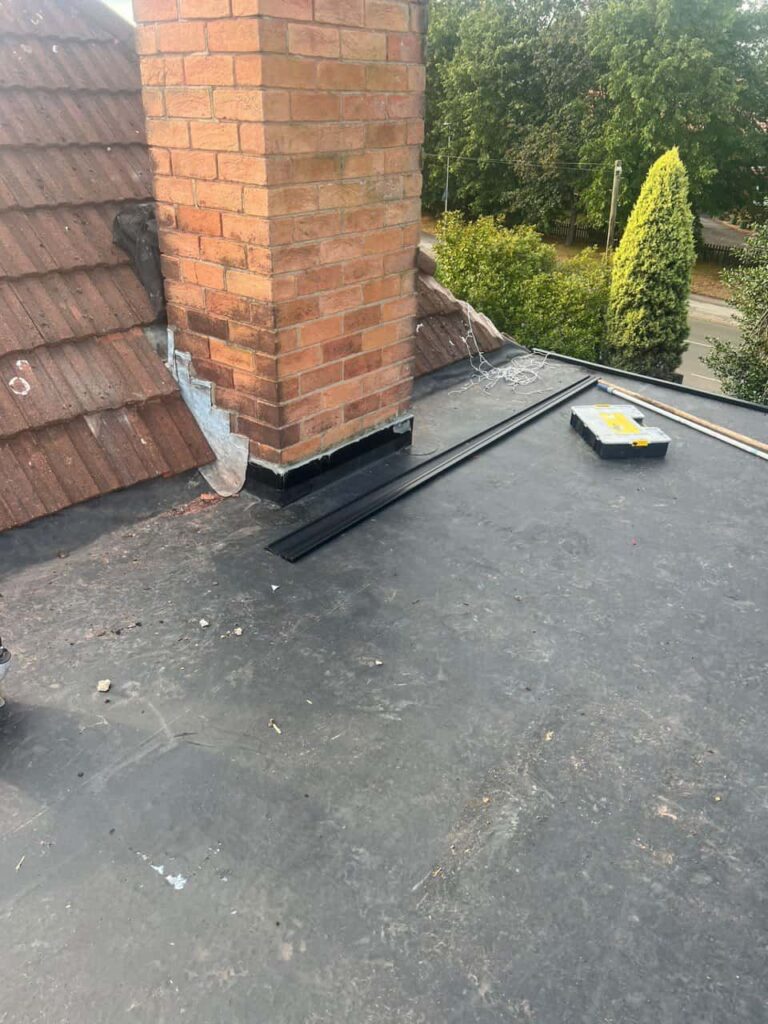
A persistent roof leak can be difficult to diagnose because the point where water appears inside a property is not always directly beneath the damaged area. Rainwater can enter through a small opening in the roof covering, travel along supporting timbers or other structural components, and eventually become visible as a damp patch on a ceiling or wall.
Finding the actual source is essential for carrying out an effective repair. Simply treating the visible water damage without addressing the entry point may allow the problem to return. For homeowners in Beeston, Nottingham, understanding how roof leaks develop and what signs to look for can help identify when professional roofing assistance is needed.
Start by Identifying Where the Water Appears
The first step in investigating a roof leak is to note where moisture becomes visible inside the property. Look for water stains, peeling paint, damp patches, bubbling plaster or persistent dripping, particularly after rainfall.
Pay attention to whether the problem appears in the same location each time or affects different areas during heavier rain. This information can help narrow down the possible cause.
However, the visible stain should not automatically be treated as the source of the leak. Water may travel along rafters, roof battens or insulation before reaching the ceiling, meaning the original defect could be some distance away.
Common Areas Where Roof Leaks Originate
Certain parts of a roof are more vulnerable to water penetration because they involve joints, openings or changes in the roof structure.
Damaged or Slipped Roof Tiles
Cracked, broken or displaced tiles can expose the underlying roof layers to rainwater. Strong winds, ageing materials and general deterioration can all contribute to tile movement.
Even a small gap may allow water to reach the underlay and supporting structure. Checking for missing or uneven tiles from ground level can provide an initial indication of a possible problem, although a closer professional inspection is often required.
Faulty Lead Flashing
Lead flashing protects vulnerable junctions around chimneys, roof abutments and other roof features. If the flashing becomes cracked, loose or separated from the adjoining masonry, rainwater can penetrate behind it.
Leaks caused by flashing defects may be difficult to locate because water can enter around the junction and travel beneath the roof covering before becoming visible indoors.
Damaged Ridge and Hip Tiles
Ridge and hip tiles protect the upper joints of a pitched roof. Deteriorating mortar, loose fixings or displaced tiles can create openings where rainwater enters.
A persistent leak near the upper part of a ceiling or roof space may justify checking the condition of these areas, particularly if the roof has experienced strong winds.
Blocked or Damaged Gutters
Although gutters are not part of the main roof covering, problems with the drainage system can contribute to water entering the property. Blocked gutters may cause rainwater to overflow against external walls or collect around roof edges.
Cracked joints, loose brackets and damaged downpipes can also prevent water from draining away correctly. Checking the guttering alongside the roof covering is therefore an important part of investigating recurring dampness.
Flat Roof Membrane Defects
Flat roofs can develop leaks when the waterproof membrane becomes split, blistered or detached. Damaged seams, failing edge details and poorly sealed roof penetrations can also allow moisture to enter.
Persistent standing water may place additional strain on an already deteriorating covering. The source of a flat roof leak may not always be obvious from the location of the internal water stain.
Look for Patterns After Rainfall
The timing and circumstances of a leak can provide useful clues about its origin.
For example, water appearing only during heavy rainfall may suggest that a roof defect becomes more vulnerable when larger volumes of water reach the surface. Leaks that occur during windy conditions may indicate an opening around flashing, tiles or exposed roof junctions where rain is being driven beneath the covering.
If dampness remains visible long after rainfall has stopped, moisture may have accumulated within insulation, timber or other building materials.
Keeping a record of when the leak occurs and which internal areas are affected can help a roofing specialist investigate the problem more efficiently.
Why the Roof Space Should Be Inspected Carefully
An inspection of the loft or roof space may reveal signs that help trace the route of water ingress. Look for damp insulation, water staining on timber, mould growth or visible moisture around roof penetrations.
The direction of water staining can sometimes indicate how moisture has travelled, but identifying the original entry point still requires careful assessment.
Never attempt to walk across ceiling joists or access unsafe roof areas. Wet insulation, damaged timbers and restricted access can create additional hazards. A professional roofer can inspect the relevant areas safely and determine whether the roof covering or another component is responsible.
Why Repeated Roof Leak Repairs May Fail
A roof leak can return when previous repairs have addressed only the visible symptoms rather than the underlying defect. For example, sealing an internal ceiling stain will not prevent water entering through damaged flashing or a displaced tile.
Other problems may involve more than one source of water ingress. Ageing roof coverings, deteriorating mortar and drainage defects can occur together, making a thorough inspection important before repair work begins.
Accurate diagnosis helps ensure that the repair addresses the actual cause and reduces the likelihood of repeated water penetration.
Professional Roof Leak Detection and Repairs in Beeston
Tracing a persistent roof leak requires an understanding of roof coverings, flashing, drainage and the way water moves through a building. A careful inspection can identify damaged materials, vulnerable junctions and less obvious defects that may otherwise be overlooked.
Beeston Roofing Repairs can assist property owners with investigating roof leaks and carrying out appropriate roofing repairs. Whether the problem involves slipped tiles, damaged flashing, ridge deterioration or a flat roof defect, identifying the source is an important part of restoring effective weather protection.
Conclusion
Tracing a persistent roof leak involves more than locating the damp patch inside a property. The actual entry point may be around roof tiles, flashing, ridge joints, gutters or a deteriorating flat roof covering. Understanding the pattern of the leak and inspecting the surrounding roofing components can help establish the cause.
For homeowners in Beeston, Nottingham, addressing recurring leaks promptly can help prevent further moisture damage to the roof structure and internal finishes. If you are experiencing ongoing water ingress or cannot identify where a leak is coming from, contact Beeston Roofing Repairs to arrange a professional roof inspection and discuss suitable repairs.
Call us on: 0115 647 1193
Click here to find out more about Beeston Roofing Repairs
Click here to complete our contact form and see how we can help with your roofing needs.