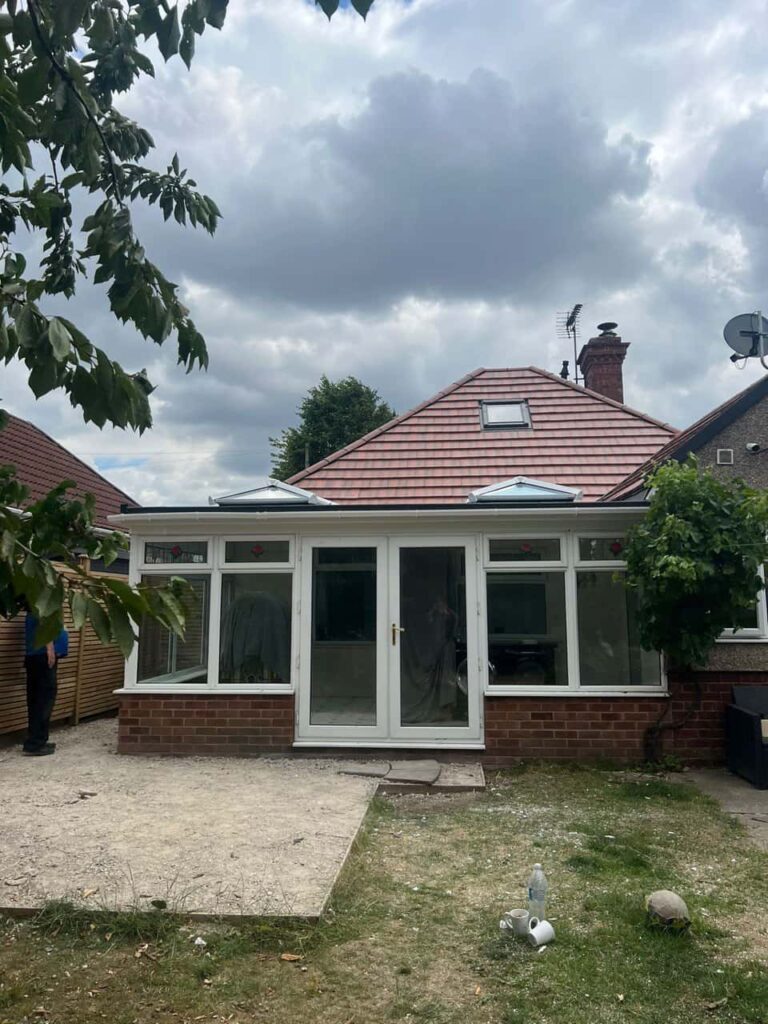
Roof tiles rely on an overlapping arrangement to direct rainwater down the roof and into the guttering. When one or more tiles slip out of position, gaps can form within this protective covering. Even when no water is visible inside the property, the underlay, battens and roof structure may be exposed to changing weather conditions.
If you notice displaced roof tiles at a property in Beeston, Nottingham, the sensible approach is to arrange a professional assessment promptly. Identifying why the tiles moved is just as important as returning them to their correct position.
How to Respond to Slipped Roof Tiles
A slipped tile can be an isolated problem or an early sign of deterioration elsewhere in the roof. Taking the following steps can help limit further damage and ensure that the correct repair is completed.
Keep Away from the Area Beneath the Roof
A tile that has already moved may fall from the roof, particularly during further wind or rain. Other nearby tiles may also have loosened without visibly slipping.
Keep people, vehicles and movable items away from the affected area where practical. If fragments have already fallen, avoid standing directly below the roof slope because additional material could be unstable.
Do Not Attempt to Move the Tile Yourself
Roof tiles are difficult to access safely, and the surrounding covering may be more fragile than it appears. Walking on the roof can crack sound tiles, disturb neighbouring materials or damage the underlay.
Temporary surface-level adjustments can also conceal the original cause without creating a dependable repair. Professional access allows the tile, its fixing and the supporting materials to be examined properly.
Check the Loft for Signs of Water Ingress
A slipped tile does not always produce an immediate leak. The roofing underlay may redirect some moisture for a limited time, while the position of the opening may only admit water during wind-driven rain.
Where it is safe to enter the loft, look for:
- Damp or darkened roof timbers
- Wet patches on the underlay
- Moisture around fixings or battens
- Compressed or damp insulation
- Daylight through the roof covering
- Water marks on ceilings or walls
- A musty smell that was not present previously
Avoid touching electrical fittings or entering any area that appears unsafe. The absence of visible dampness should not be taken as proof that the roof remains fully weatherproof.
Record the Position of the Damage
Note where the slipped tiles are located and when the movement was first observed. Photographs taken from ground level can be helpful, particularly if the defect is near a ridge, verge, valley, chimney or roof window.
Do not climb a ladder simply to obtain a clearer picture. A roofer will need to inspect the area closely regardless of what can be seen from below.
Arrange an Inspection Before the Gap Worsens
A tile that has moved slightly may continue slipping until it falls. Wind can also enter beneath a raised edge and place pressure on adjacent tiles, potentially increasing the affected area.
A professional inspection should establish:
- Whether the tile is cracked or reusable
- Whether its fixing has failed
- If the supporting batten is sound
- Whether neighbouring tiles are loose
- If the underlay has torn or deteriorated
- Whether moisture has entered beneath the covering
- If movement is present elsewhere on the roof
Completing this assessment early can help keep the repair focused on the defective section.
Identify Why the Tiles Slipped
Replacing or repositioning a tile without identifying the cause may allow the problem to return. Common reasons for tile movement include:
- Corroded, loose or missing fixings
- Deteriorated timber battens
- Cracks around the tile’s fixing point
- Strong wind lifting a vulnerable edge
- Incorrect installation or insufficient overlap
- Movement in adjoining ridge or verge details
- General ageing of the roof covering
Different causes require different solutions. A damaged tile may need replacement, while failed battens or fixings require attention beneath the visible surface.
Check the Surrounding Roof Area
Tiles of a similar age may have experienced the same exposure and wear. One slipped tile can therefore indicate that nearby fixings or battens are also beginning to weaken.
The inspection should include the surrounding courses as well as nearby roof junctions. Cracked tiles, uneven lines, failed mortar, loose ridge components and damaged flashing can all affect the reliability of the repaired section.
Understand Why a Dry Ceiling Does Not Remove the Risk
Roof leaks are not always visible immediately. Water may travel along the underlay or a roof timber before reaching the ceiling, so the internal stain can appear away from the displaced tile.
A gap may also remain dry during light vertical rain but allow water through when the wind changes direction. Waiting for a damp patch to develop can give moisture more time to affect concealed roofing materials.
What a Professional Repair May Involve
The correct repair will depend on the condition of the tile and the structure beneath it. Work may involve refitting a serviceable tile, installing a suitable replacement, renewing its fixing or repairing a damaged batten.
If the underlay or neighbouring tiles have also been affected, these should be addressed as part of the same repair. The aim is to restore the correct overlap and secure the entire local area, rather than simply improving its appearance from the ground.
Conclusion
When roof tiles slip out of position, keep clear of the area below, check for internal signs of moisture and arrange a professional inspection. The problem should be assessed even if the roof has not yet started leaking, as the displaced tile may have exposed vulnerable materials beneath the covering.
Beeston Roofing Repairs provides professional slipped tile inspections and roof repairs in Beeston, Nottingham. If you have noticed a tile that is loose, uneven or out of position, contact our team to arrange an assessment and determine the appropriate repair.
Call us on: 0115 647 1193
Click here to find out more about Beeston Roofing Repairs
Click here to complete our contact form and see how we can help with your roofing needs.