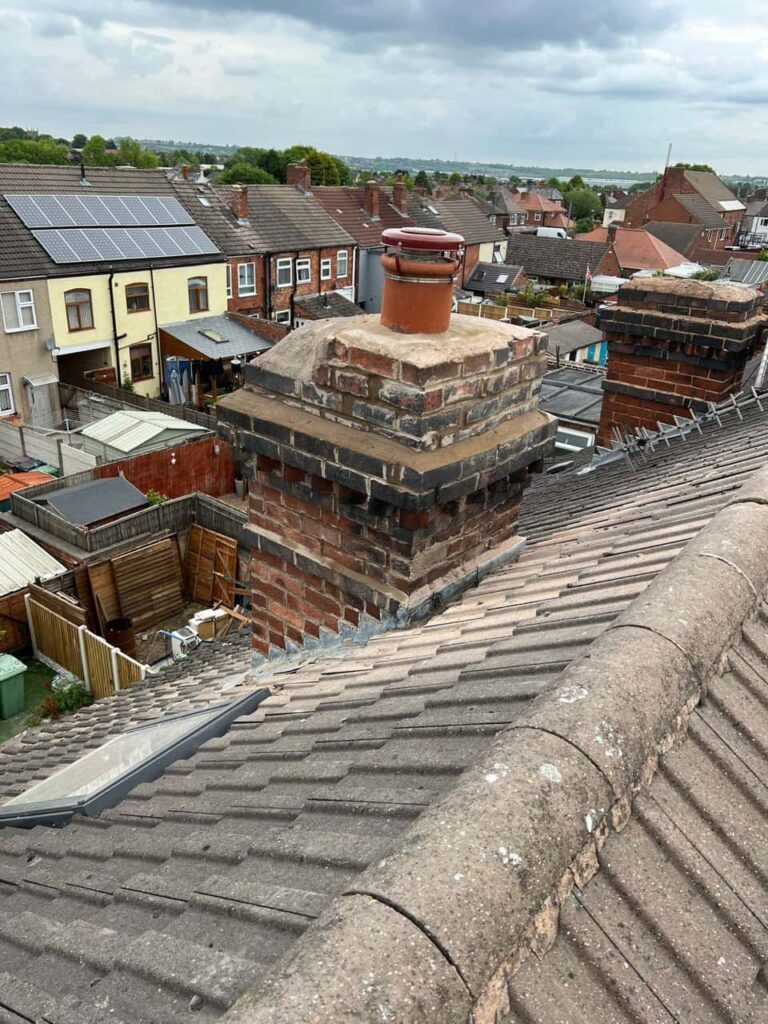
Many homeowners view their chimney and roof as separate parts of the property, but in reality, they work closely together. Because a chimney penetrates the roof structure, it creates one of the most vulnerable areas on any roof. When chimney-related issues develop, they can often lead directly to roofing problems, including leaks, water damage and structural deterioration.
For homeowners in Beeston, Nottingham, understanding the connection between chimneys and roofing issues can help prevent small defects from becoming costly and disruptive problems. At Beeston Roofing Repairs, we regularly inspect and repair roofs where chimney-related defects have compromised the roof’s ability to keep the property protected from the elements.
Why Chimneys Are Vulnerable Areas
Unlike the rest of the roof, which is designed to create a continuous weatherproof surface, a chimney interrupts that surface.
This means the roofing system must incorporate additional components to ensure the area around the chimney remains watertight. Over time, these areas can become vulnerable due to:
- Weather exposure
- Ageing materials
- Structural movement
- General wear and tear
As a result, chimneys are one of the most common locations where roofing issues first develop.
The Importance of Chimney Flashing
Flashing is the material used to seal the junction between the chimney and the roof covering.
Its purpose is to prevent rainwater from entering the gaps where the chimney meets the roof. If flashing becomes damaged, loose or deteriorated, water can quickly find its way into the roof structure.
Signs of flashing problems may include:
- Ceiling stains
- Damp patches in loft spaces
- Water ingress during rainfall
- Visible gaps around the chimney base
Professional inspections can identify flashing defects before they lead to more serious damage.
Cracked Mortar and Masonry
Chimneys are constantly exposed to the weather and often show signs of ageing before other parts of the property.
Over time, mortar joints can weaken and masonry can begin to crack. These defects may allow moisture to penetrate the chimney structure and affect surrounding roofing materials.
For homeowners in Beeston, Nottingham, regular chimney inspections can help identify early signs of deterioration before extensive repairs become necessary.
Water Ingress Around Chimneys
When water enters around a chimney, the effects are not always immediately obvious.
Moisture can travel through:
- Roof timbers
- Underlay
- Loft insulation
- Internal ceiling structures
By the time visible signs appear inside the property, the problem may have already been developing for some time.
This is one reason why chimney-related roof leaks can be difficult for homeowners to diagnose without professional assistance.
Loose or Damaged Roof Tiles Around the Chimney
The area surrounding a chimney often experiences more movement and weather exposure than other parts of the roof.
As a result, tiles and slates adjacent to the chimney may become:
- Loose
- Cracked
- Dislodged
- Damaged by weather conditions
These defects can create additional pathways for water to enter the roof structure, increasing the risk of leaks and internal damage.
Chimney Movement Can Affect Roofing Systems
As properties settle and materials age, slight movement can occur within chimney structures.
Even minor movement may place stress on:
- Flashing
- Roofing materials
- Mortar joints
- Roof junctions
Over time, this can create weaknesses that compromise the roof’s weatherproofing capabilities.
Professional roofers assess both the chimney and surrounding roof areas to ensure all components remain secure and effective.
Blocked or Deteriorating Chimney Features
Older chimneys often contain features such as chimney pots, caps and protective coverings that help prevent weather-related damage.
When these components deteriorate or become damaged, they can contribute to moisture-related issues that affect both the chimney and the roof.
Routine maintenance helps ensure these features continue to perform their intended function.
The Value of Regular Roof and Chimney Inspections
Because chimney defects often develop gradually, routine inspections are one of the best ways to prevent serious roofing problems.
Professional surveys can identify:
- Worn flashing
- Cracked mortar
- Loose tiles
- Structural concerns
- Early signs of water ingress
Addressing these issues promptly helps protect both the chimney and the roof from further deterioration.
At Beeston Roofing Repairs, we provide comprehensive roof and chimney inspections throughout Beeston, Nottingham, helping homeowners identify potential issues before they become major concerns.
Conclusion
Chimneys and roofs are closely connected, and problems affecting one often impact the other. Damaged flashing, deteriorating mortar, loose tiles and water ingress around the chimney can all lead to roofing issues that compromise the protection of the property.
For homeowners in Beeston, Nottingham, regular maintenance and professional inspections are essential for keeping both the chimney and roof in good condition. If you have noticed signs of leaks, dampness or chimney deterioration, Beeston Roofing Repairs can provide expert advice and professional roofing services to help safeguard your home.
Call us on: 0115 647 1193
Click here to find out more about Beeston Roofing Repairs
Click here to complete our contact form and see how we can help with your roofing needs.