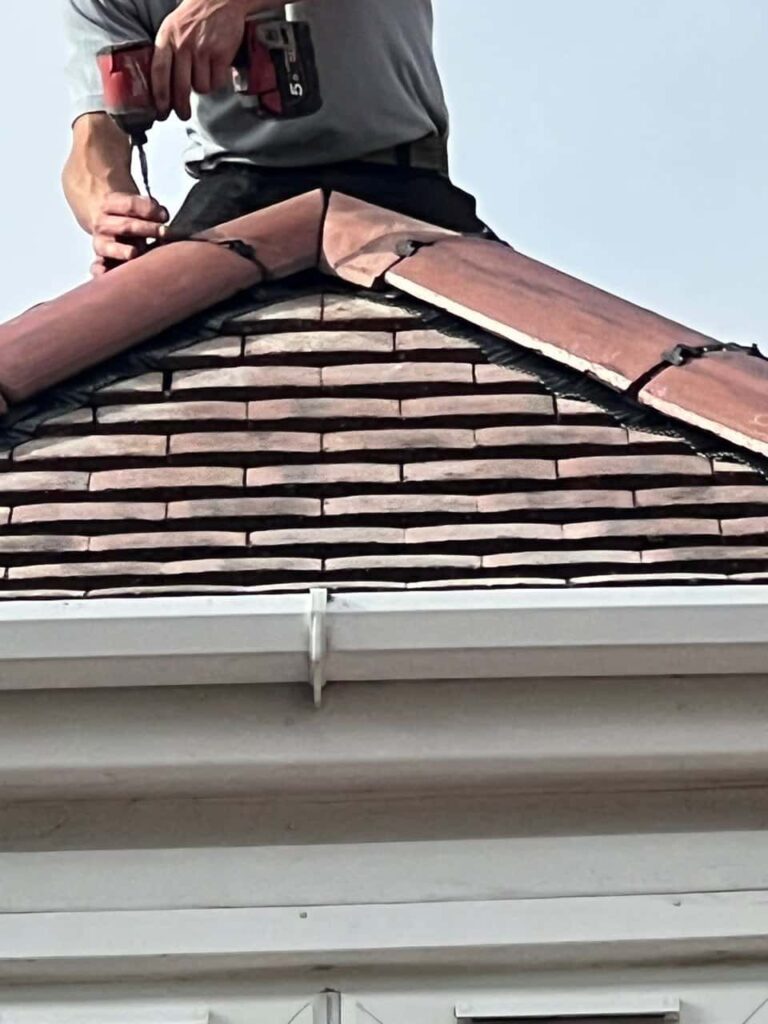
Many homeowners are puzzled when a roof appears completely dry for weeks, only to leak during a specific type of weather. This is a common issue and one that often leads to uncertainty about whether the problem is serious. In Beeston, roofs are regularly exposed to changing weather patterns, and some leaks only reveal themselves when conditions align in a particular way.
At Beeston Roofing Repairs, we frequently investigate weather-dependent roof leaks that are not obvious during routine checks.
Wind-Driven Rain Can Force Water Into Hidden Gaps
Not all rain falls vertically. During strong winds, rain can be driven sideways and upwards, forcing water beneath tiles, slates, or flashing that normally shed water effectively.
These conditions can expose weaknesses that remain hidden during calm rainfall, making leaks appear only when wind and rain combine in a certain direction.
Roof Pitch and Water Flow Behaviour
Roofs rely on gravity to move water safely away. On lower-pitched sections, water drains more slowly, increasing the chance of ingress when rainfall is heavy or prolonged.
Under intense downpours, water can overwhelm vulnerable points, particularly where materials have aged or slight movement has occurred over time.
Temperature Changes Cause Roof Movement
Roofing materials expand and contract as temperatures rise and fall. During colder or warmer spells, this movement can briefly open gaps around joints, fixings, or flashing.
In some cases, leaks only occur when materials are under thermal stress, which explains why a roof may leak in winter but remain dry in milder conditions.
Blocked or Overloaded Drainage Routes
Gutters, valleys, and outlets play a vital role in managing water flow. When these areas become partially blocked, water can back up and spill into places it should not reach.
During heavy rainfall, this overflow can lead to leaks that do not occur during lighter showers, making the problem seem inconsistent.
Water Can Travel Before Becoming Visible
One of the most confusing aspects of roof leaks is that water rarely appears directly beneath the point of entry. Once inside the roof, it can travel along timbers, under membranes, or across insulation before emerging indoors.
As a result, leaks may only become visible after sustained rainfall, when water has had time to build up and move through the roof structure.
Some Defects Only Fail Under Pressure
Minor defects, such as small cracks or worn seals, may cope with normal conditions but fail when exposed to prolonged rain, strong winds, or rapid temperature shifts.
These weaknesses can remain dormant for long periods, only becoming apparent when weather conditions place extra pressure on the roof.
Why Professional Diagnosis Is Essential
Weather-dependent leaks are often misdiagnosed because they cannot be replicated easily. Identifying them requires experience, careful inspection, and an understanding of how roofs behave in different conditions.
At Beeston Roofing Repairs, we assess not only visible damage but also how the roof performs during varying weather patterns common to Beeston.
Conclusion
Roof leaks that only appear during certain weather conditions are usually the result of wind-driven rain, temperature-related movement, drainage issues, or hidden defects that only fail under pressure. These leaks can be misleading, but they should never be ignored.
If you are experiencing an intermittent roof leak in Beeston, Beeston Roofing Repairs is here to help. Our team can carry out a thorough assessment, identify the true cause of the problem, and provide professional guidance to restore your roof’s reliability and protect your home in all weather conditions.
Call us on: 0115 647 1193
Click here to find out more about Beeston Roofing Repairs
Click here to complete our contact form and see how we can help with your roofing needs.